June 16, 2025
by: Jodi Gruhn, Wholesome Minnesota Director

A Note on the Recent Tragedies
Before moving on to Jodi’s post, CAA would like to share that we are deeply saddened by the tragic shooting that claimed the life of former Minnesota House Speaker Melissa Hortman and her husband, Mark Hortman, and critically injured Senator John Hoffman and his wife, Yvette Hoffman. Our hearts go out to their families and loved ones. Amidst this painful moment, we remain steadfast in our commitment to building a peaceful, compassionate future for all.
Wholesome Minnesota is working alongside MN Plant-Based Kids to pass legislation that calls Minnesota public school districts to offer plant-based meal options upon request. Similar to what was passed in Illinois in 2023, we are asking Minnesota’s legislature to deliver on the promise of universal meals for all students and support family/student choice. While this legislation seems like a simple ask, legislative change takes an excruciating amount of time requiring us to play the long game.
Think of Passing a Bill Like Building a House
You wouldn’t start construction without blueprints, permits, and the right team. Similarly, getting HF2764 and SF2970 (our plant-based school meals bills) passed requires careful groundwork that could take years.
The Foundation Phase — Finding Your Champions
Before we can even introduce our bill, we need legislative authors — lawmakers willing to put their name and reputation behind our cause. This isn’t as simple as asking; it requires building relationships, demonstrating community need, and showing how plant-based options align with their values and their constituents’ interests. In our case we worked hard and got Rep. Huldah Momanyi-Hiltsley and Senator Steve Cwodinski to be authors of our bill.
The Blueprint Phase — Getting Bill Numbers
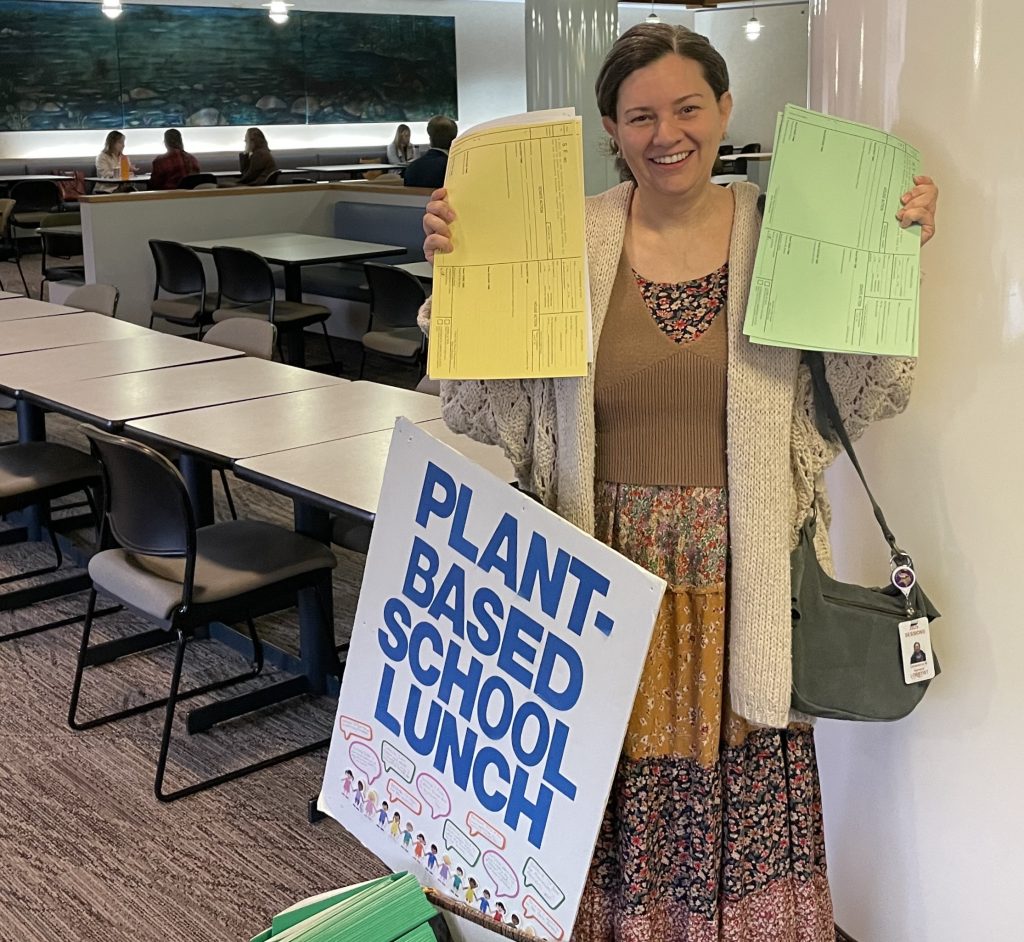
Once we have authors, the bills receive their official numbers (in our case, HF2764 in the House, SF2970 in the Senate). But getting these numbers is just the beginning, it’s like getting a construction permit before you’ve even broken ground.
The Construction Phase — Building Support
Here’s where the real work began. We researched each legislator’s priorities: Does Senator X champion childhood nutrition? Does Representative Y focus on reducing healthcare costs? We then crafted our message to show how plant-based school meals advance their goals — whether that’s supporting farm-to-school programs, reducing childhood obesity, accommodating students with dietary restrictions, or reducing food waste in schools. We have been hard at work doing this groundwork on our bill.
Think of it like a neighborhood campaign for a new park. You don’t just tell everyone “parks are nice.” You tell the young families about safe play spaces, the seniors about walking paths, and the environmentalists about native plant gardens.
The Signature Collection — Making It Official
Before the bill could even be introduced for debate and given a hearing, legislators had to physically sign supporting documents. This meant countless meetings and follow-ups, waiting outside conference rooms to catch them as they transitioned to their next meeting and posting up at their offices hoping they would return to them. It’s like getting enough neighbors to sign a petition, except these neighbors have packed schedules, hundreds of competing priorities and are never home.
In the end, we did not get a hearing for plant-based school food upon request this session. The work will continue throughout the summer and fall to build our coalition and find more individual supporters (like you) to take actions that will increase the possibility of our plant-based school meals bills getting passed.
The Power of Showing Up
“Legislation is decided by those who show up.” —Unknown

The plant-based school meal option bills (HF2764 & SF2970) are official, but now comes the critical next step, securing committee hearings next session. Think of committee hearings as job interviews for legislation — they’re where bills prove themselves through expert testimony, stakeholder input, and public support.
The reality is, lawmakers prioritize bills based on how much their constituents care. The more voices they hear, the higher our bills climb on their priority list.
We Need Your Voice
We need you to help take the next steps. Here are some easy ways to get involved:
Make the Call. Contact your Minnesota House Representative and State Senator today (find your representative). Tell them to support and prioritize plant-based school meal option legislation. Each call signals that real constituents care about this issue. The more often you call, the clearer our commitment becomes.
Endorse the Bill and Share the Endorsement Form. You can endorse the bill as an individual or an organization. Take a moment and lend your support. Sign the endorsement form.
Share Your Story. We’re collecting testimonials from parents, students, and community members. Do you have a child with dietary restrictions? Have you seen the positive impact of plant-based nutrition? Your personal story carries more weight than any statistic. We want to hear why this matters to you.
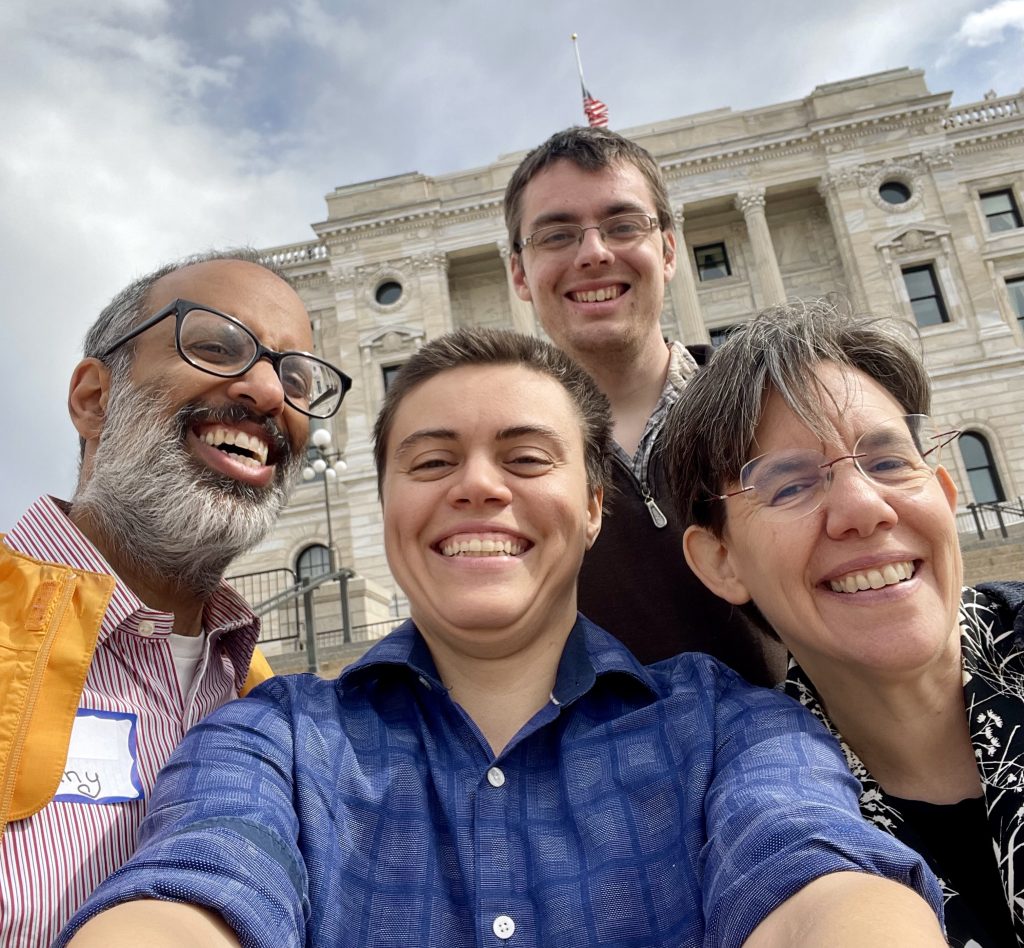
Student Voices Matter Most. We especially need students who want plant-based options in their schools. Young voices prove there’s actual demand, not just adult assumptions about what kids want. If you know a student advocate, connect us, their testimony could be what makes our bill(s) become law.
Coalition and Collaboration
We’re not working alone. As co-chair of the Plant-Powered School Meals State Policy Working Group, we’re part of a national network sharing strategies, resources, and solutions. When Minnesota or other states pass this legislation, we have a blueprint others can follow.
Student Power Multiplied. Our outreach efforts have built us relationships with students who want to make school food inclusive. They will create social media content to educate their peers and organize student activists around school nutrition. This is peer-to-peer advocacy in action — students talking to students about the future they want to see.
Expert Analysis: We were selected to receive an intern from the Healthy Future Students and Earth Pilot Program Youth Steering Committee. Our intern, Quincy Alberhasky is a member of Brown University Class of 2028 with a concentration in environmental science and has much experience with advocacy and organizing. She will help us mobilize Minnesota students and analyze the cost and the waste reduction potential of plant-based school food.
Why This Process Matters
Each step builds momentum and legitimacy. A bill that rushes through without proper groundwork may fail, while bills with strong foundations and a supportive coalition, even if they may take multiple legislative sessions, create lasting change.
This is the methodical work of democracy. Research on legislative districts, travel to meet representatives across Minnesota, and staff time is needed to build a coalition and nurture relationships over months (maybe even years).
The Bottom Line
Legislative change is a marathon, not a sprint. But when we cross the finish line, every Minnesota student will have access to meals that support their values and future. Minnesota’s Free School Meals Program (2023-2024) served over 150 million meals to students. Our efforts will make more of these meals plant-based — which is good for health, good for the planet, and good for the animals. That’s worth the long game.
Recent Comments